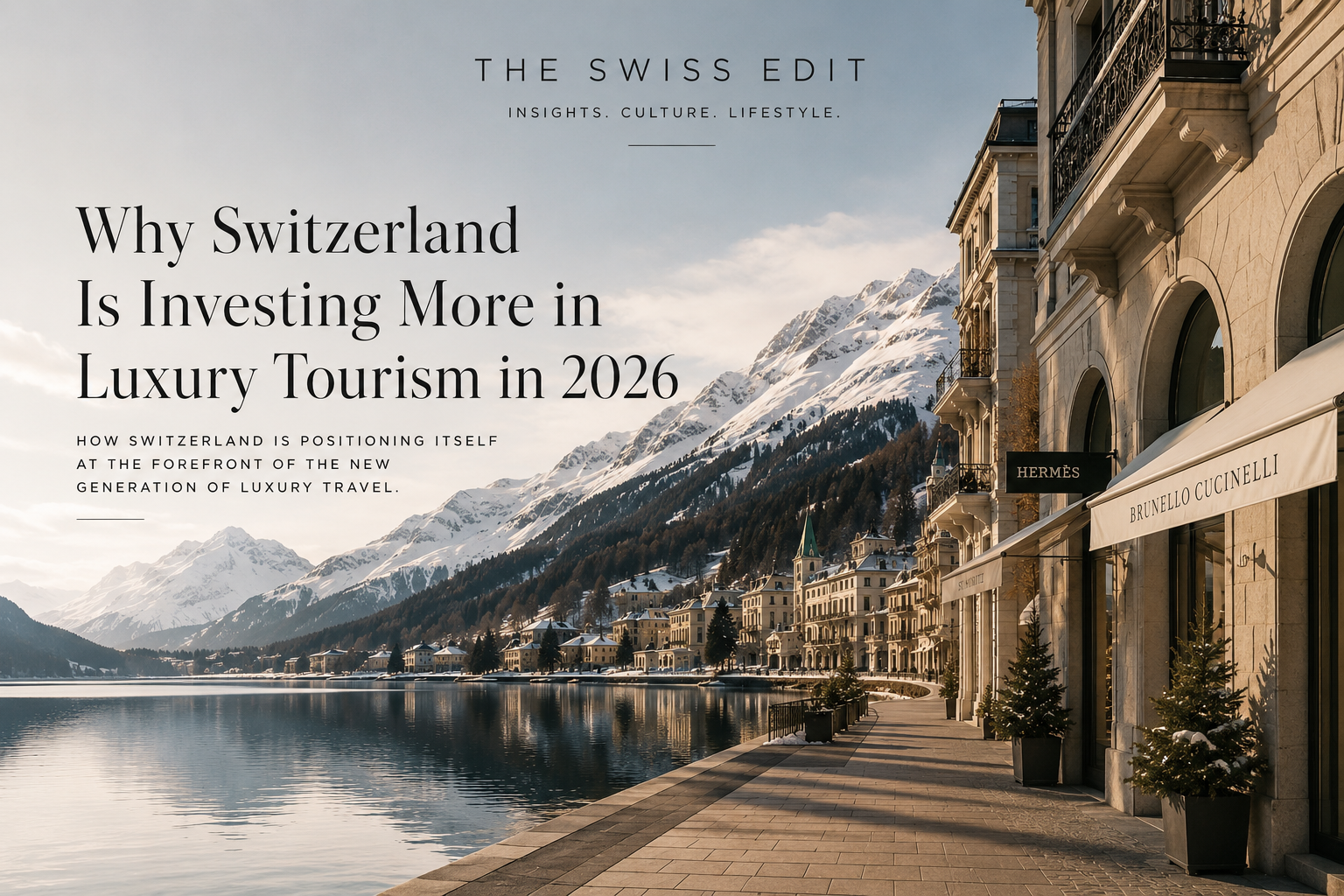
Something interesting is happening in Switzerland right now.
In 2025, Switzerland Tourism officially launched luxury travel as its own dedicated market segment. At first, this may sound obvious. Switzerland has long been associated with luxury: alpine resorts, iconic hotels, wellness retreats, watches, private banking, and premium hospitality.
But what makes this move fascinating is why it is happening now.
Luxury itself is changing.
For years, luxury marketing revolved around visibility, exclusivity, and material consumption. Today, consumer culture is shifting toward something more emotional and experiential. Increasingly, luxury is becoming less about owning expensive things and more about accessing rare feelings: privacy, wellbeing, calmness, personalization, and quality time. Recent luxury travel reports from EHL Hospitality Insights suggest affluent travelers are increasingly prioritizing slower, more curated, and emotionally meaningful experiences over purely status-driven consumption.
And perhaps no country aligns more naturally with this transition than Switzerland.
Living here, I started noticing that Swiss luxury operates differently from many global markets. Swiss brands rarely feel loud or aggressively performative. Instead, they communicate through restraint, precision, and consistency. Whether it is a luxury hotel, a watch, skincare, architecture, or even supermarket packaging, Swiss branding often feels quietly confident rather than attention-seeking.
This is also deeply connected to the trust Swiss consumers place in nationally produced products. “Swiss Made” functions almost like a psychological reassurance mechanism. Swiss-produced goods are globally associated with reliability, technical excellence, craftsmanship, and long-term quality. In an increasingly unstable and overstimulated world, trust itself has become a luxury asset.
And this may explain why Switzerland feels so aligned with the rise of what many now call “quiet luxury.” While other markets are only now rediscovering minimalism, discretion, and timelessness, Swiss culture has normalized many of these values for decades. Luxury here often feels less about visible excess and more about subtle signals: exceptional materials, functionality, calmness, longevity, and precision.
Economically, the opportunity is enormous. According to Switzerland Tourism, luxury stays already generate around 25% of the country’s tourism revenue while representing only a small share of overnight stays. Luxury travelers tend to stay longer, spend more, and seek highly personalized experiences. Switzerland is therefore no longer simply selling tourism. It is positioning itself as a premium lifestyle ecosystem.
You can already see this transformation happening across the country. Boutique wellness hotels, longevity retreats, personalized alpine experiences, and sustainable luxury hospitality are increasingly becoming part of Switzerland’s modern luxury identity. Even Swiss luxury brands are evolving toward more immersive storytelling and experience-driven branding to connect with younger generations.
What fascinates me most is that Switzerland’s greatest luxury advantage may not actually be wealth or exclusivity.
It may simply be credibility.
In a world dominated by digital noise, overstimulation, and constant visibility, Switzerland continues to market something increasingly rare: trust, stability, calmness, and consistency.
And perhaps in 2026, those are becoming the ultimate luxury products.





Leave a Reply