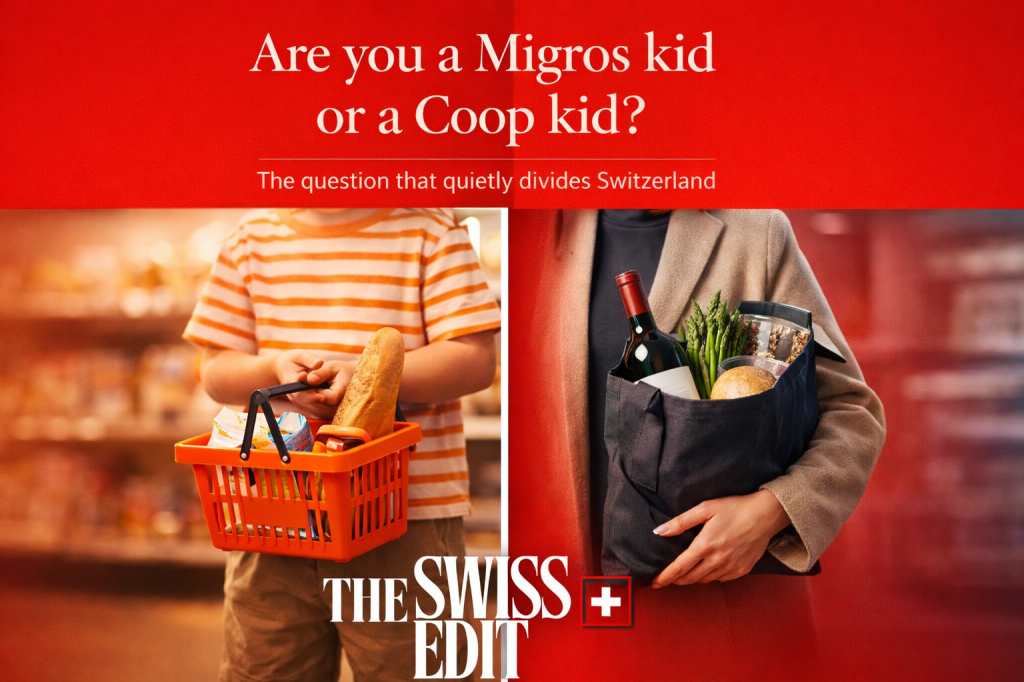
The quiet system behind Switzerland’s most powerful brands.
At the start of my master’s in Switzerland, I was asked a question that felt oddly out of place.
“Are you a Migros kid or a Coop kid?”
It didn’t sound academic. It didn’t sound strategic. If anything, it felt like small talk, the kind of cultural shorthand locals use without thinking twice. I didn’t have an answer, but not because I preferred one over the other, but because I didn’t yet understand what the question was really asking. I bought at Migros because it was closer to my home, but I had never given thought to it.
It would take time — and a shift in perspective — to realize that this wasn’t about supermarkets at all. It was about something far more structured, and far more intentional: how brands embed themselves into everyday life so deeply that they stop being perceived as brands altogether.
To understand that, you have to step back and understand the foundation of both supermarkets.
On one hand, Migros did not begin as a conventional retailer. When Gottlieb Duttweiler founded it in 1925, his ambition was not simply to sell goods, but to correct a system. Food distribution at the time was expensive and controlled. His model, direct, affordable, accessible, was economic, but also ideological. Migros was designed to serve the majority.
It later became a cooperative, owned by its customers. That detail is often mentioned, but rarely unpacked. Because what it really means is this:
- Migros was never built to maximize transactions.
- It was built to sustain relationships over time.
That difference shapes everything that followed. Even decisions that might seem restrictive — like the refusal to sell alcohol — are not limitations in this context. They are signals. Boundaries that reinforce predictability. And predictability, in markets like Switzerland, compounds into trust. And after decades, that trust becomes something else entirely: familiarity that no longer needs to be questioned.
This is where Migros’ strategy becomes particularly precise. It does not wait for consumers to form preferences. It enters before preferences exist.
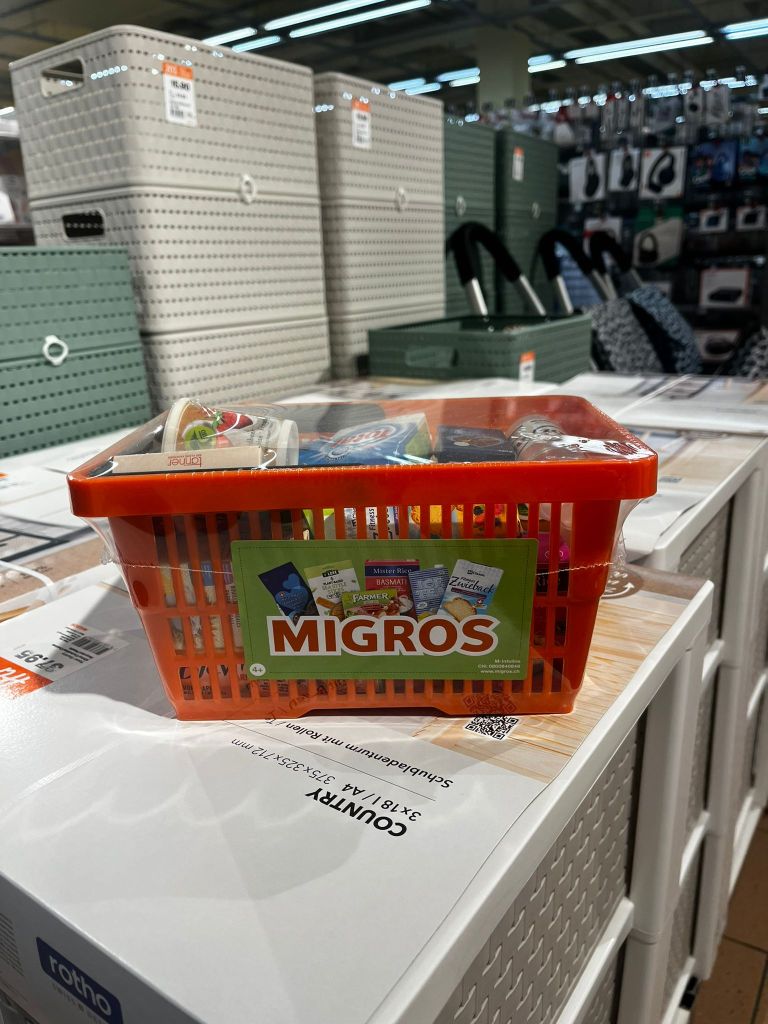
The small orange children’s basket — something almost every child in Switzerland has owned, received, or carried at some point — illustrates this better than any campaign ever could. It looks insignificant. Almost playful. But it performs a very specific function. It introduces a child to the logic of consumption:
- moving through a store
- selecting products
- participating in the act of buying
And crucially, it assigns that first experience to a single environment. There is no comparison. No evaluation. Only repetition. And repetition, at that stage, does something powerful. It establishes a baseline, a sense of what is normal. By the time that child becomes an independent consumer, that baseline is already in place. Migros does not need to compete aggressively at that point. It is already embedded in the definition of everyday life.
Coop, despite sharing cooperative roots, developed along a different trajectory.Where Migros focused on accessibility and internal consistency, Coop expanded — geographically, operationally, and conceptually. It integrated a wider assortment, embraced international brands, and leaned into premium positioning.
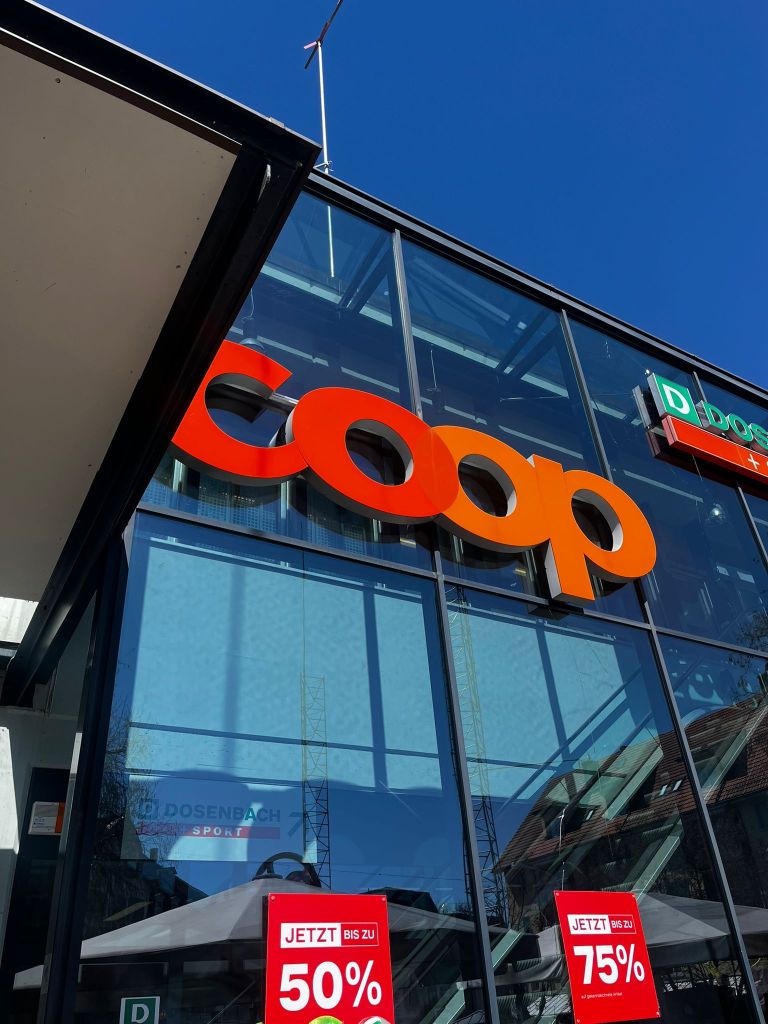
If Migros built depth, Coop built breadth. And with that came a different kind of relationship with the consumer. Coop does not seek to define your first experience. It becomes relevant when you begin to refine it. Walking into Coop feels different, but not in an obvious way. The distinction is subtle — more variety, more recognizable global brands, more emphasis on organic and premium selections.
But the real difference is not in the shelves. It is in the framing. Where Migros reduces the need to think, Coop reintroduces it — as choice. And then it layers that choice with aspiration.
Its loyalty system reflects this clearly. Points are not exchanged for playful rewards, but for objects that carry meaning beyond their function — kitchen appliances, designer collaborations, products associated with a certain standard of living. The mechanism is simple, but the implication is not and then consumption becomes directional. Not just something you do, but something that signals where you are going.
What emerges, then, is not a rivalry in the traditional sense, but a division of roles. Migros establishes the baseline. Coop stretches it. One anchors behavior early. The other reframes it later. They do not compete for the same moment. They structure the consumer journey across time.
Seen from this perspective, the original question changes. “Are you a Migros kid or a Coop kid?” It is no longer casual. It is observational. It asks, in a way that feels almost effortless, where you sit within this system: Were your habits formed through early familiarity? Or are your choices now guided by refinement and aspiration?
What is striking is not just that this system exists, but how quietly it operates. There are no loud claims. No explicit segmentation. No direct confrontation between the brands. And yet, the positioning is unmistakably clear. That clarity does not come from communication alone. It comes from alignment — between origin, philosophy, and execution over time.
Looking back, what initially felt like an irrelevant question now reads as something else entirely. A compressed insight into how Switzerland builds brands. Not by pushing harder at the point of sale. But by understanding when influence matters most. Earlier, when habits are formed. Or later, when identity is redefined. But always with precision. And once you see it, it becomes difficult to unsee. Because you realize that what appears to be a simple choice was never entirely yours to begin with. It was shaped — slowly, consistently — long before you were asked to make it.
With all of this said. What do you think? Are you a Migros kid or a Coop kid?
by Grazia Rabasa 2026

 The Swiss Edit
Stay curious. Stay loud. Join the conversation.